Starting point
The cycle path - Ossana
Directions
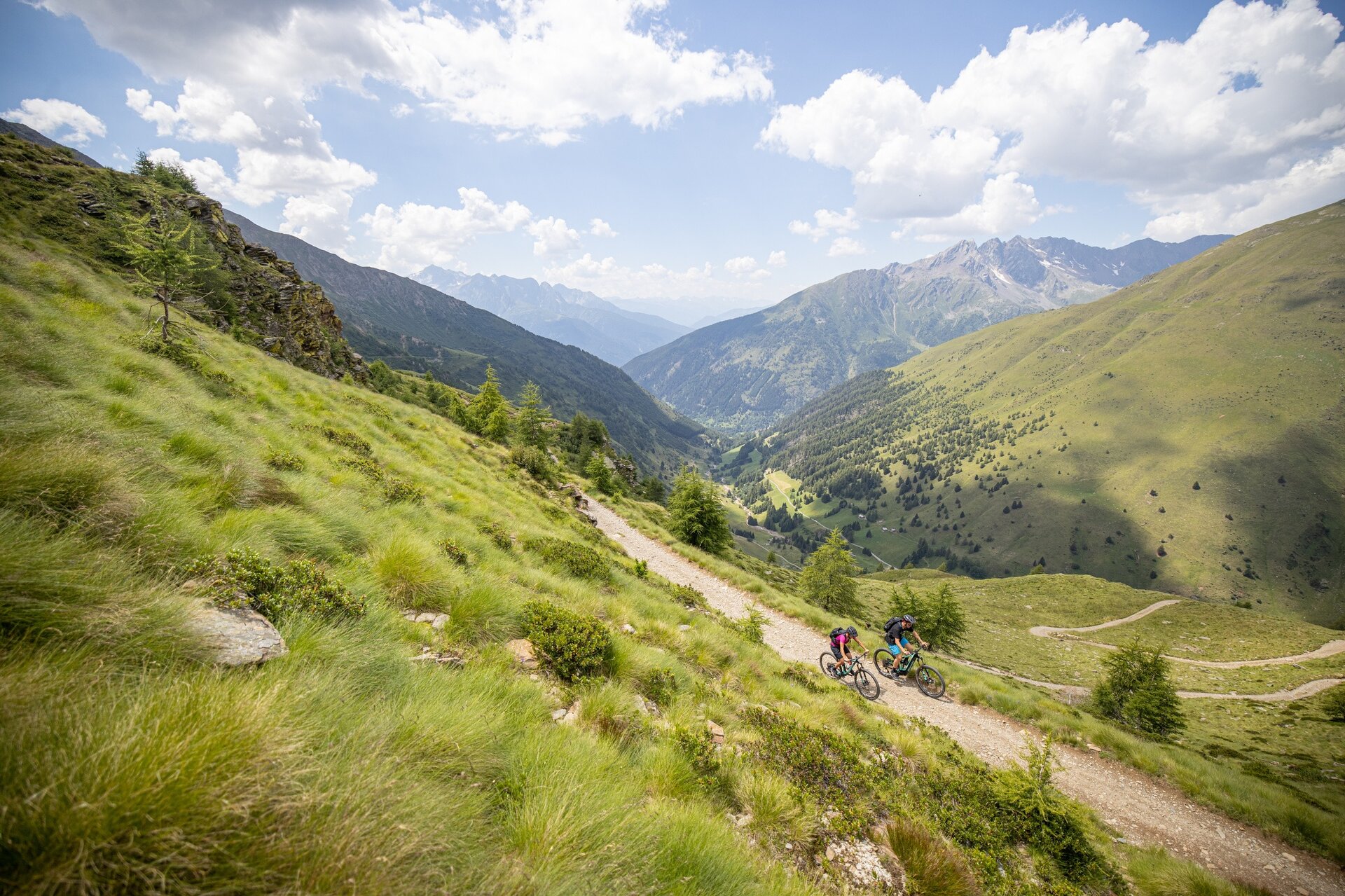
From the village of Fucine towards Ossana, after the bridge over the Vermigliana stream and just after the climb to the castle, on the right there is a dirt road that climbs beyond some new houses in the woods, heading towards Passo Tonale. Passing a large area used by the forestry corps and adjacent to the noisy Vermigliana stream, the road becomes steeper and more difficult, leading to some fields and the locality known as 'Poia', located on the southern side of Val Vermiglio. The route, with its numerous ups and downs, follows the valley to 'Volpaia' (farmhouse) located on a vast plain at Stavel, with a view of the imposing Presanella summit (3,556 m with its dizzying icy face). From here it continues on a dirt road towards Velon. After the bridge over the Vermigliana stream, climb left towards Maso Cadin, near the ruins of the old military base from the 1914-1918 war.
Passing the huts, continue right on a small road until you intersect the dirt road rising to Forte Tonale. Descend by bike for 100 m and after a short ride, on the left you will arrive near the Velon hut, after which the road gradually climbs towards Passo Tonale, first crossing the stream and then through a clearing that reaches Malga Pecè. During the First World War, this hut was the seat of the second-level Austro-Hungarian command. The oldest trees in the area still show splinters from Italian grenades. After the hut, the road, often crossed by small streams, climbs through a dense forest. After some tight curves, the forest thins allowing a view of the valley and, after some steep stretches, you reach the vicinity of state road SS42.
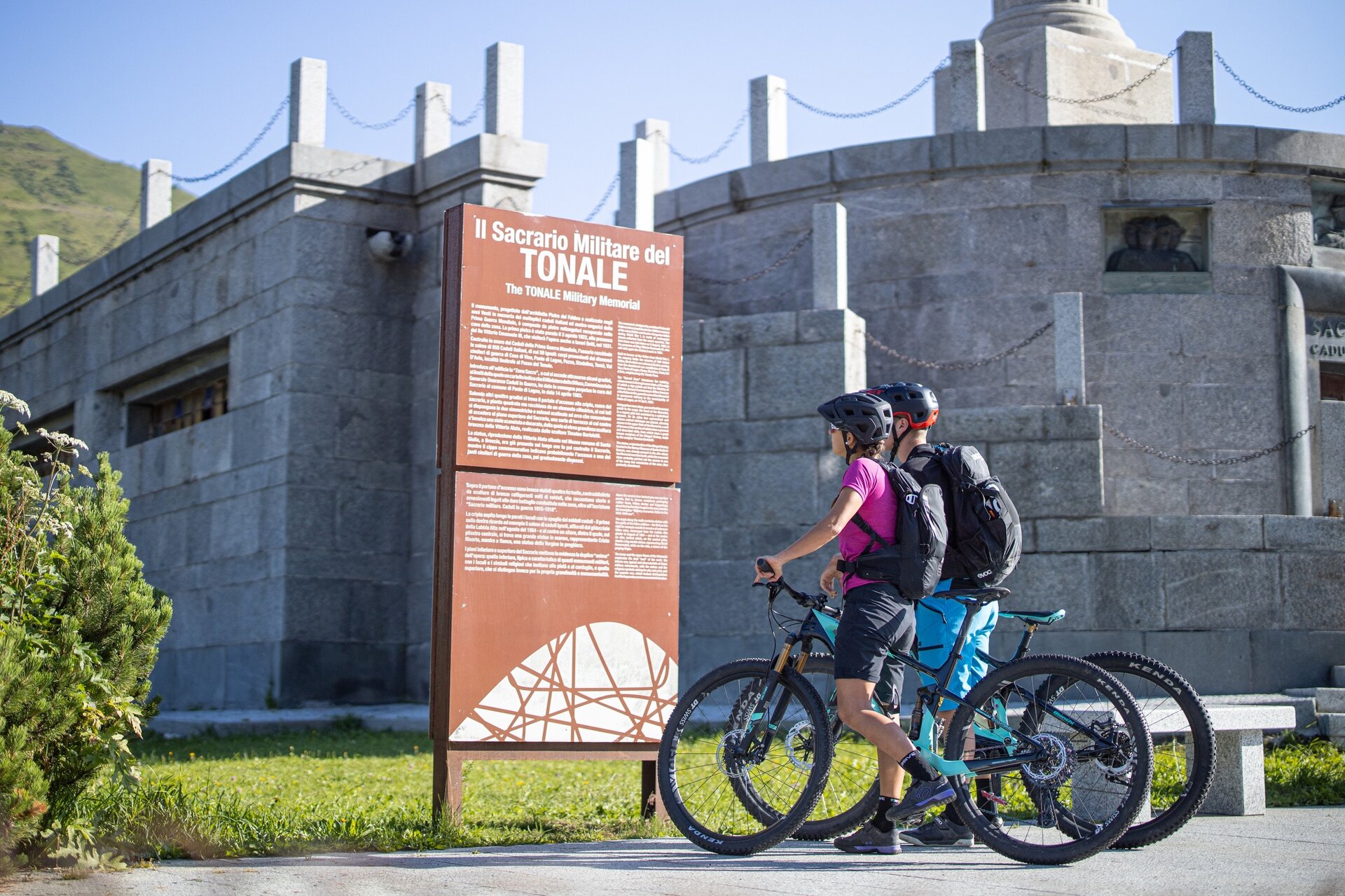
Just before the road, turn left and climb by bike towards Cantiere Presena and after 1 km, on the right following a long trail ('Path of Peace') and the slopes, you will reach Passo Tonale (a visit to the Ossuary is recommended, built in 1924 it houses the remains of 831 soldiers who died in battle around Tonale; this is the border between Lombardy and Trentino, and was once the border between Italy and Austria). Follow the state road for a few kilometers towards Ponte di Legno until you reach a very tight 180° bend (1,463 m). At this point, you will see a dirt road branching off marked Pezzo-Passo Gavia, follow this road overcoming some small valleys and some characteristic buildings, near which pay attention to a detour and a sign saying 'Case di Viso'.
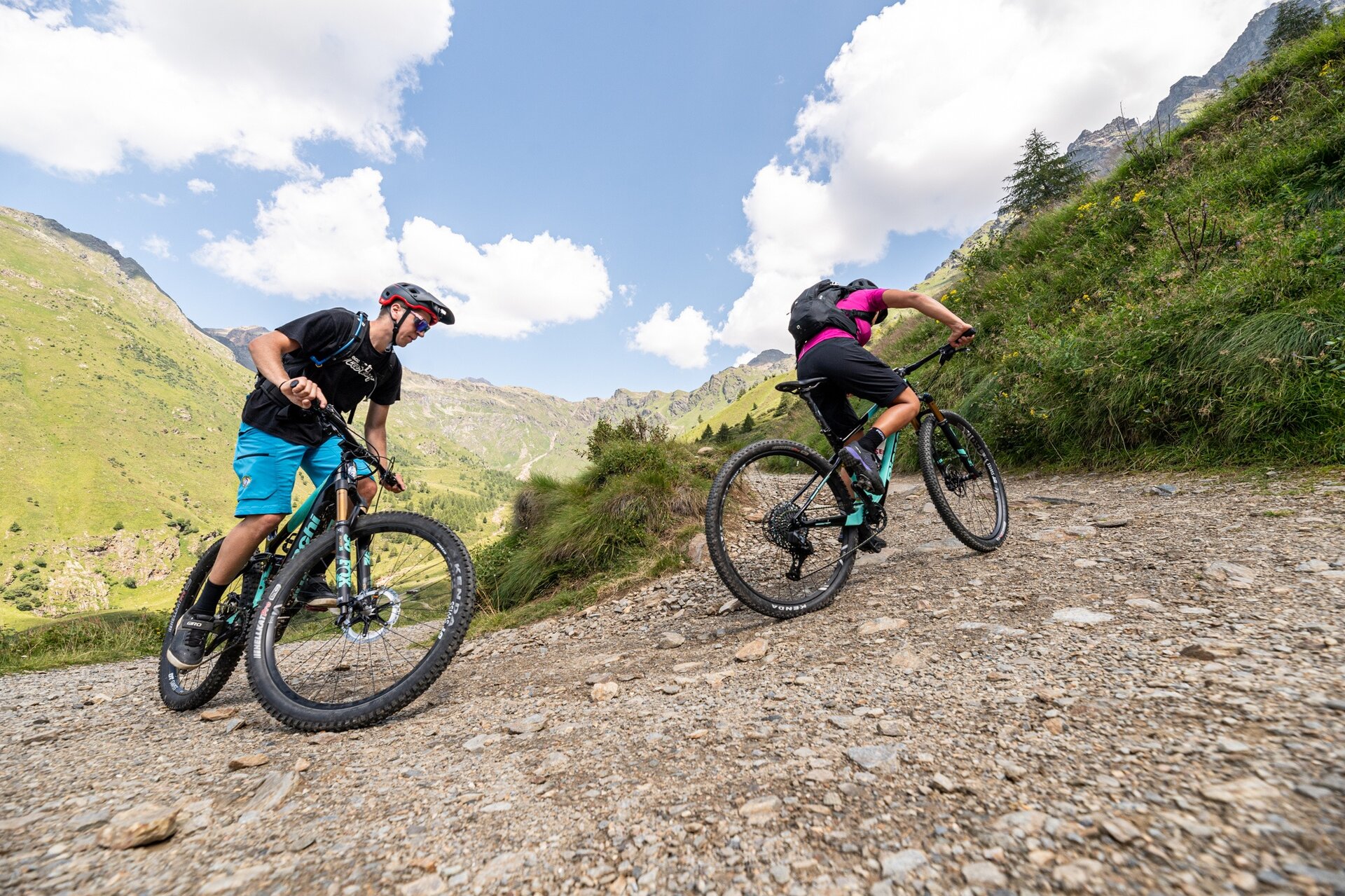
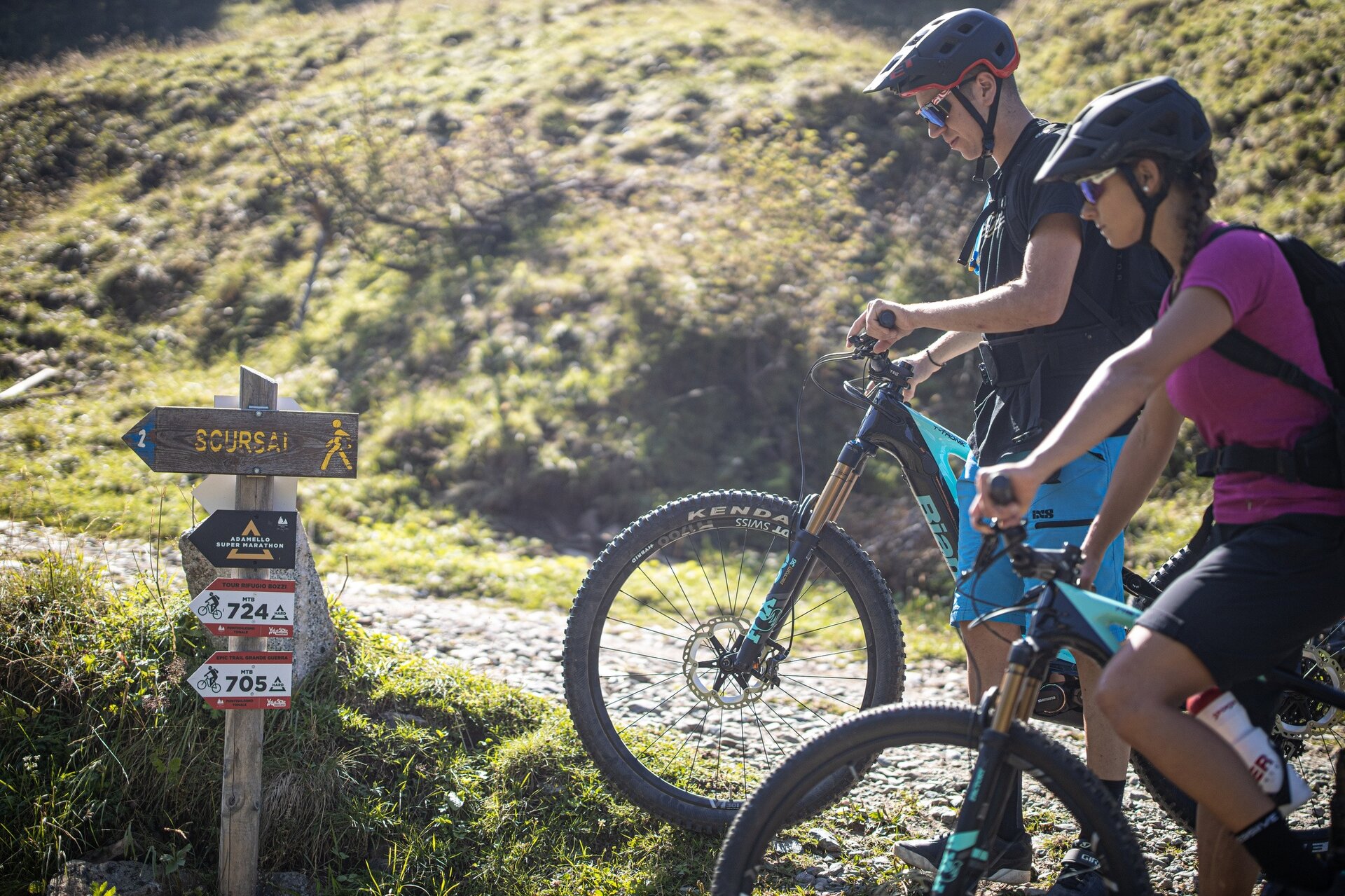
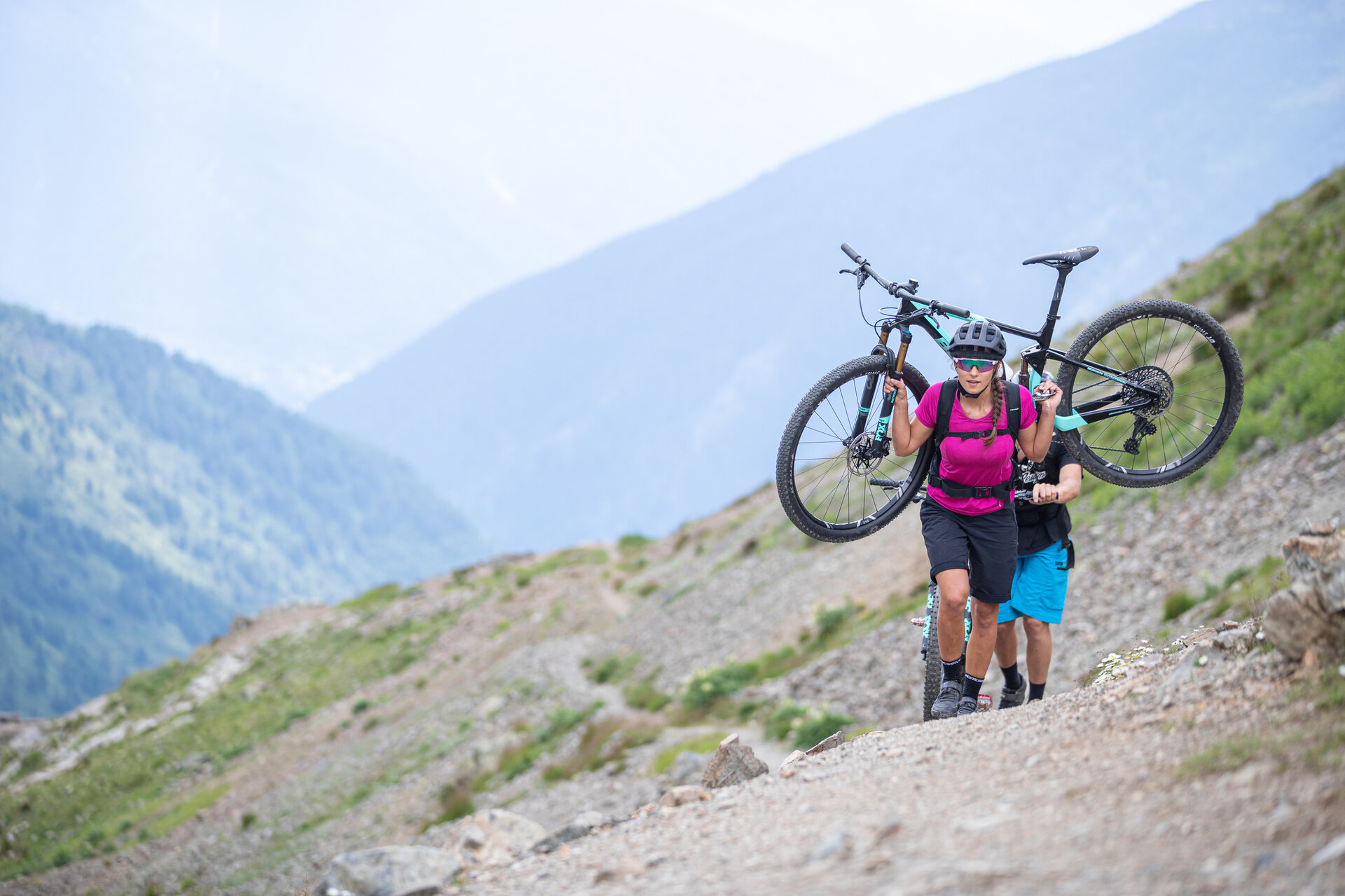
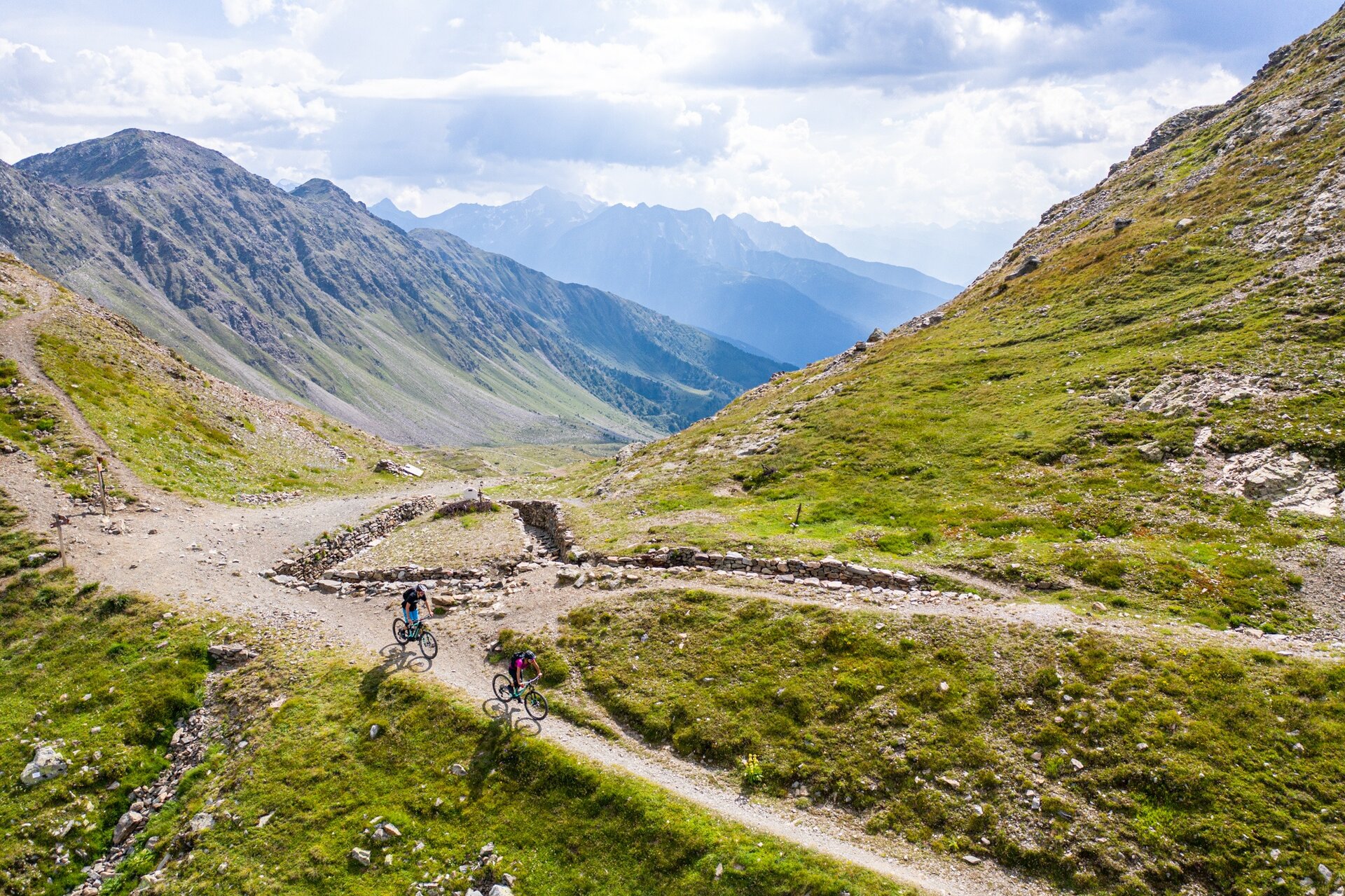
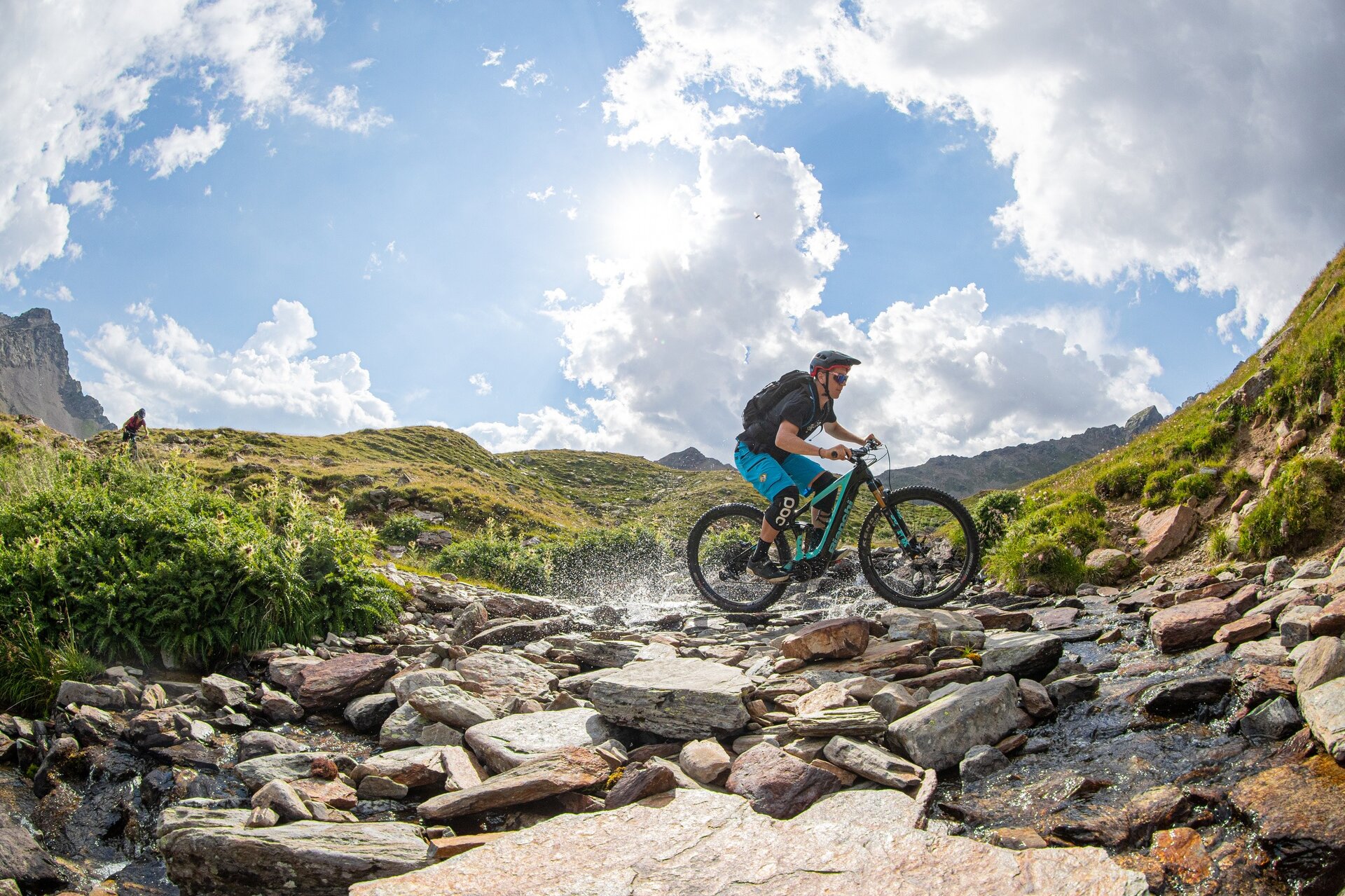
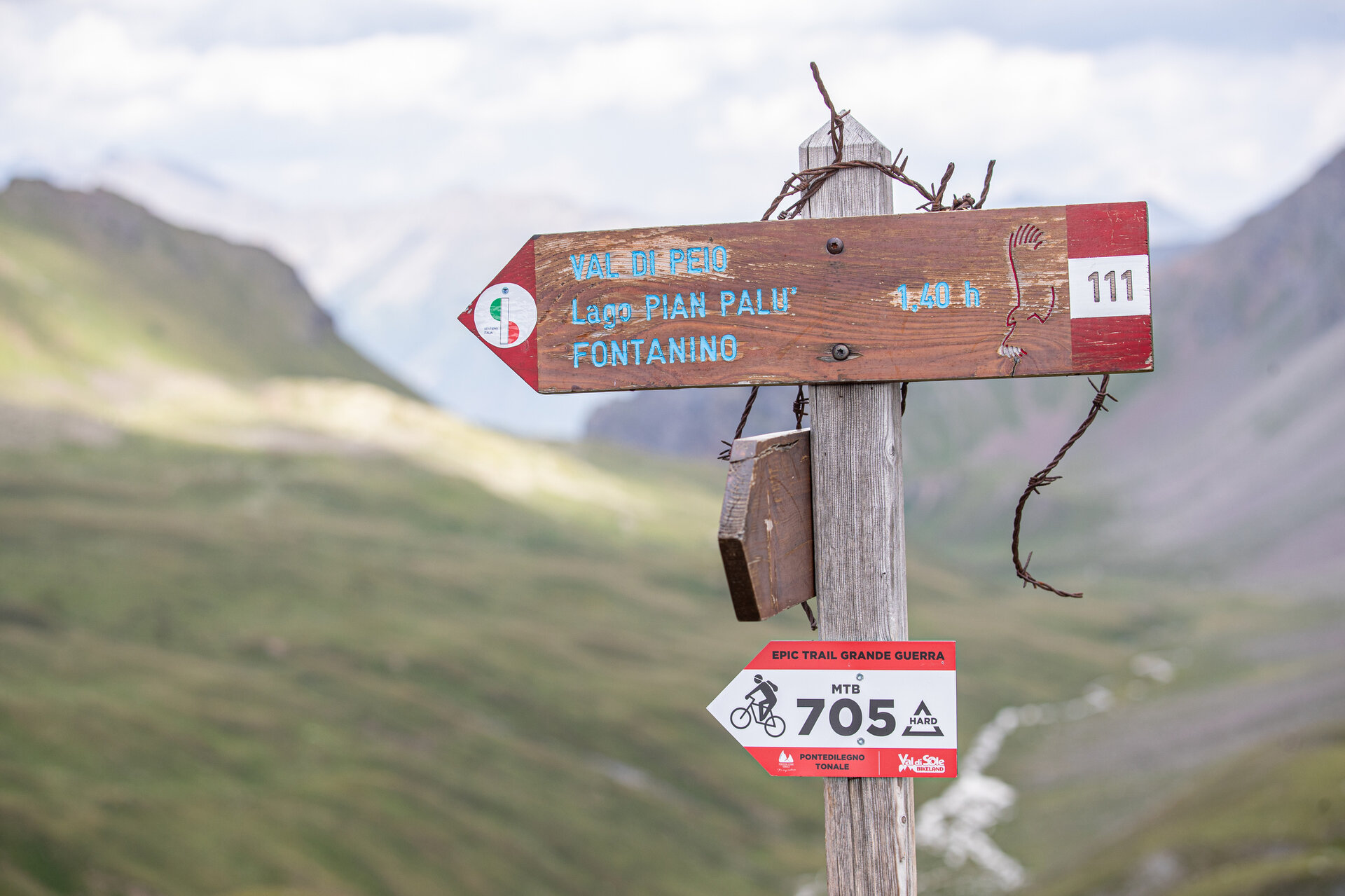
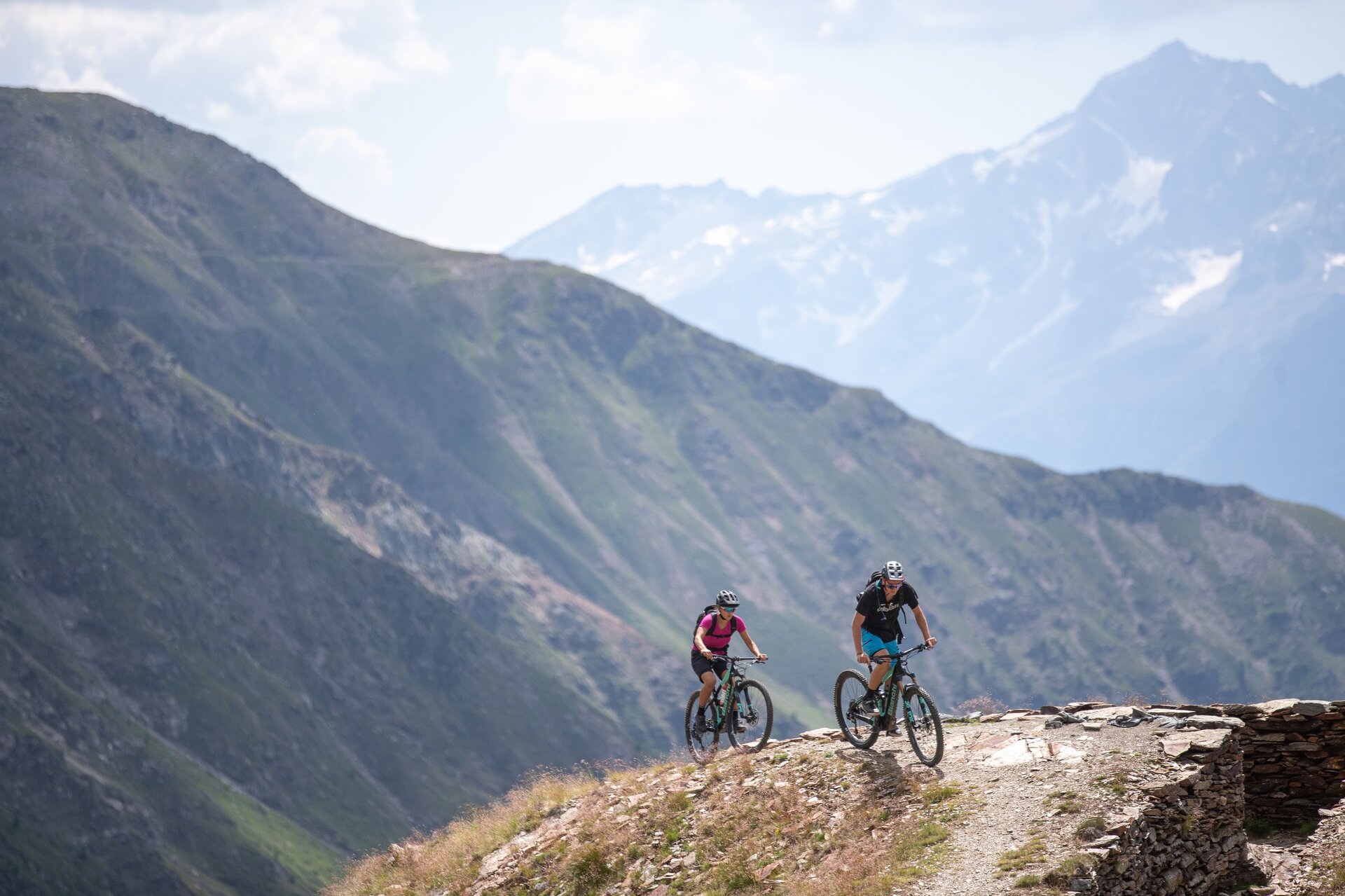
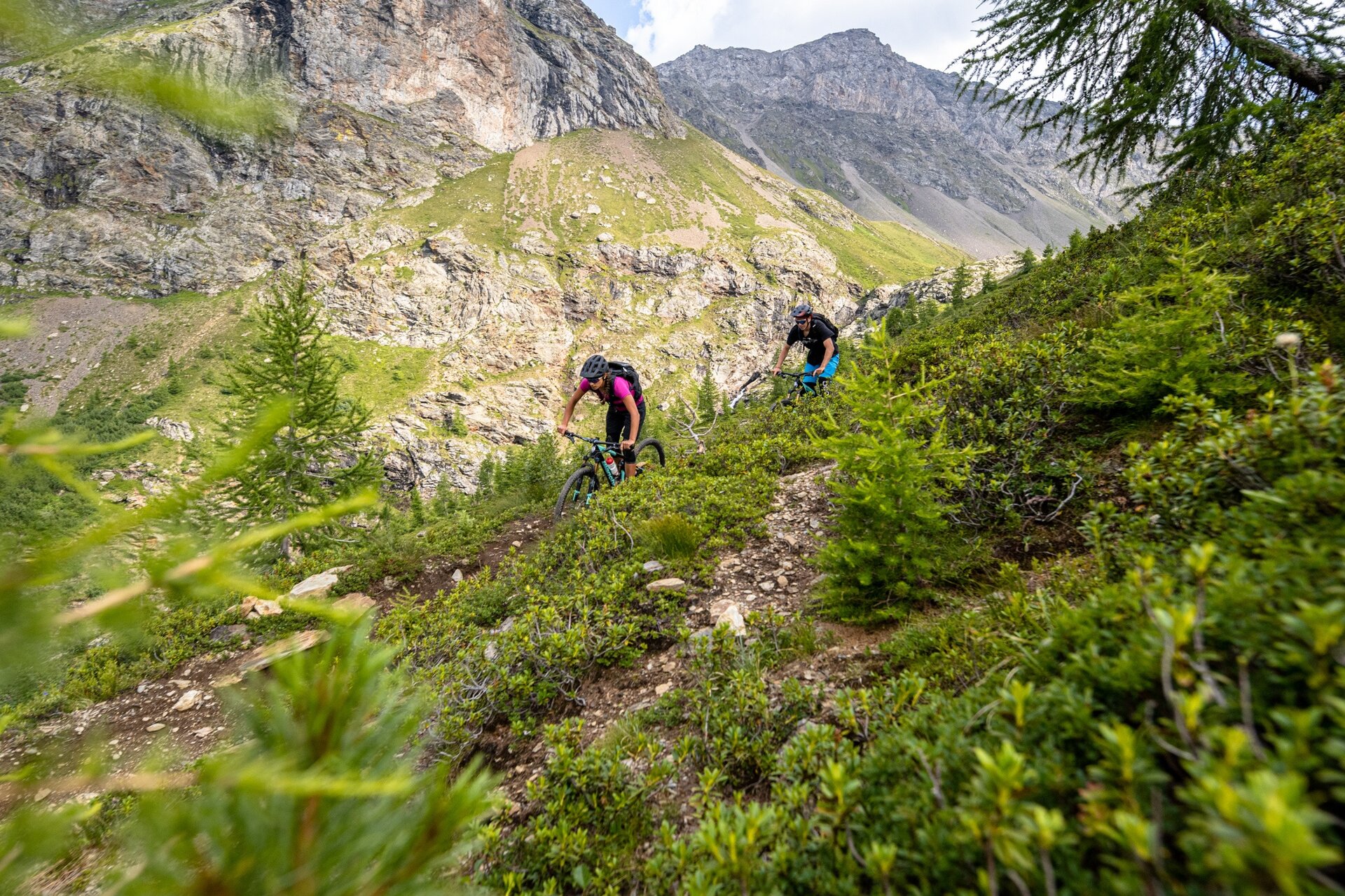
The road now becomes steeper, with an irregular and rocky surface, and gradually enters the homonymous valley, located within the Stelvio National Park, reaching the charming village of Case di Viso (1,800 m), with its stone houses, located in the valley basin (here there is a bar and a farmhouse). Here begins the old military road built during the First World War, some stretches of which are quite steep; the road then zigzags on a slope towards Rifugio Bozzi. After the slope and approaching the refuge the road becomes uneven and rocky and some stretches make it difficult to maintain balance. The road then reaches Rifugio Bozzi (2,461 m) where a break is recommended with a visit to the trenches and the small museum dedicated to the 'White War'. Another 100 m of very steep road to ride by bike (SAT 111) where it will be necessary to push the bike and you arrive at Forcellina del Montozzo, which at 2,613 m offers a breathtaking view of the Adamello Presanella mountains and the San Matteo glaciers. This natural environment, with its red-colored rocks (due to the iron present here) and the remains of the trenches offer an ideal background for a photo to keep as a memory. Thanks to recent work on the fortifications of the First World War, it is now possible to participate in trekking in the area. The gentle descent towards Val di Pejo on SAT 111 leads to Val Montozzo. There are unexpectedly fast and smooth stretches especially near the numerous streams that flow down the slopes; these become very rocky and difficult, testing the cyclist's arms and the bike's suspension. At the end of Val Montozzo, the trail passes over some slippery rocks (smoothed by the movement of the glacier). These stretches become even steeper, testing the technical skills and courage of even experienced bikers.
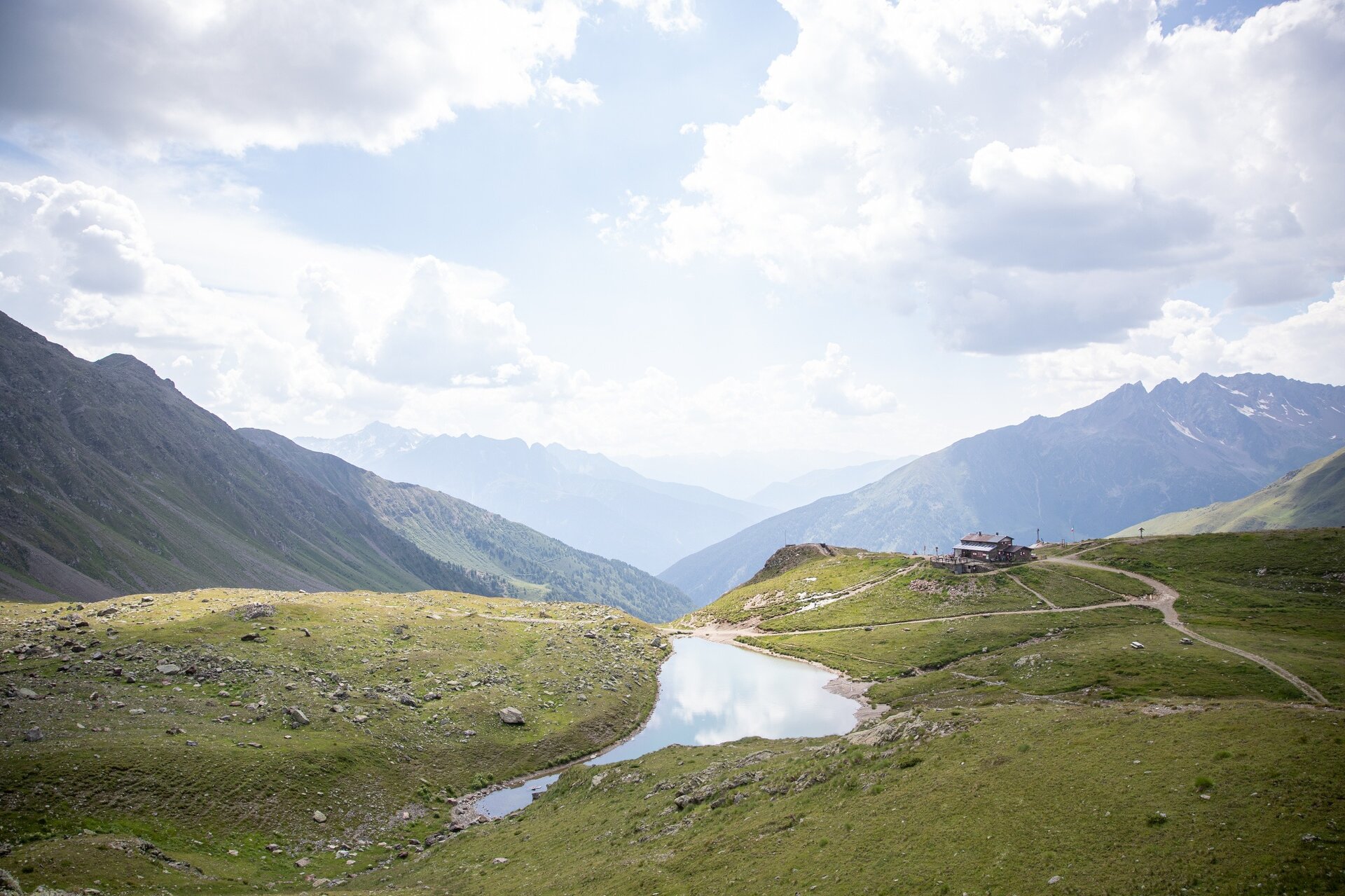
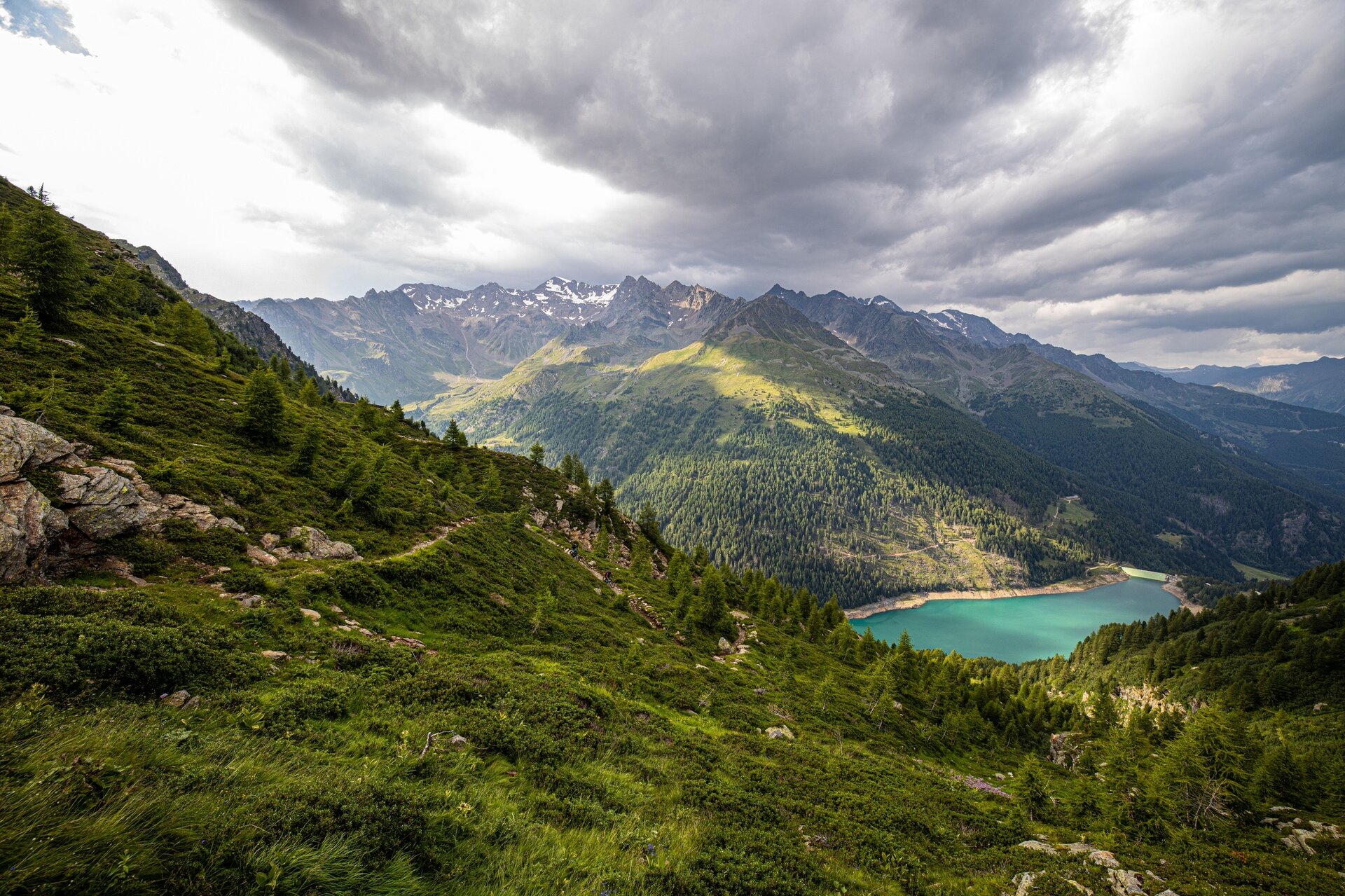
A beautiful view of emerald green Pian Palù lake is the only allowed distraction; this is due to the deep cliffs, the very uneven road, and the slope and the cyclist must pay attention at all times. After numerous tight curves, the road arrives at a junction, take the path to the left of the lake. Follow the adjacent road to Malga Celentino (1,841 m) located just above Pian Palù lake. Just beyond the hut on the right there is the SAT 110 trail, which has many technical stretches, and descends to Fontanino di Pejo (1,681 m) where you can enjoy the natural mineral water flowing from the spring. It is very important to respect hikers going downhill and to have full control of your mountain bike by pedaling carefully and attentively. From here proceed downhill on asphalt road towards Pejo Fonti and in the direction of Cogolo. Near the penultimate tight curve there is a dirt road on the right that takes you through the woods to the cycle path for the village of Fucine.



 Booking